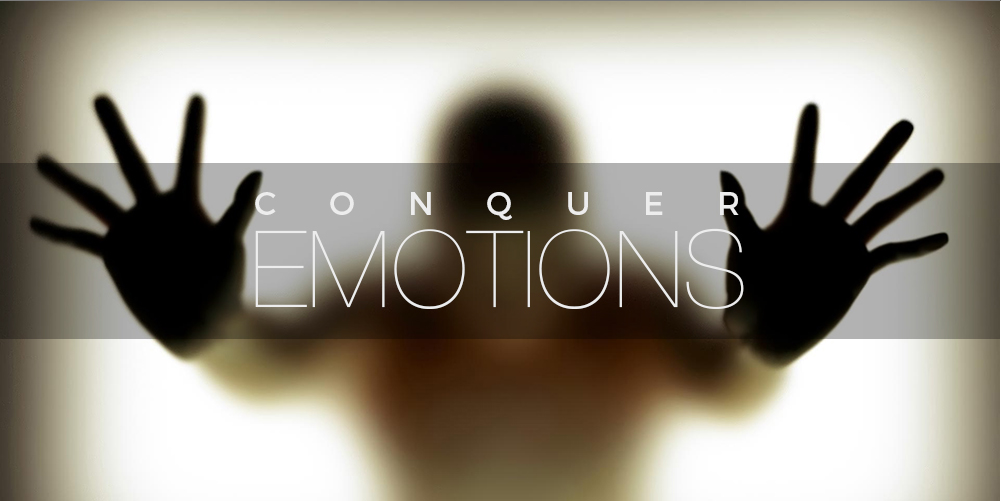

Conquering your negative emotions and re-directing them towards the positive is your greatest accomplishment yet. This is far greater than gaining the world, its allures, enticements and endless vanities.
In a previous article: Overcome Self and Earn Self-mastery, the above paragraph was the conclusion. As I read the article again, it struck me that someone could ask the question, "How do I conquer my negative emotions?" Though, thoughts on this had been sparingly shared in the article, a hint of step-by-step guide could do better for some. This is the purpose of this post.
Our emotions are either positive, negative or both. A negative emotion like anger, and failure to manage it right, could spell doom for us and those around us because it could lead us to self-harm as well as harming others. How can we manage our negative emotions? The following could help:
Be Aware of the Emotion
Awareness is curative. Being self-aware is your greatest tool towards earning self-mastery. Without the knowledge of oneself, how does one know what to fix, how to fix what needs to be fixed or build on what is a potential strength? Potentials must be grown to actual. This position is non-negotiable. It is the only way to grow the positive or ignore and stifle the negative.
Robert Greene's thought strikes me deeply at this point: Robert Greene said, "When I am angry, I write a book". And to think that every book he has written is a bestseller is quite curious. Robert Greene has surely mastered the art of converting weakness to strength. Or how else can we explain such mindset of writing a book towards correcting the wrongs done in society by people who are sold to feeding their irrationalities and being relentlessly narcissistic each time?
Being aware of what you cannot see, but, which may be undermining you, is not commonplace. Knowing your weakness is strength in itself, but perhaps we may not necessarily look at it as a weakness per se. We may just accept it as a human nature, but we must understand what purpose it serves us and those who surround us. Knowing how our nature affects us and others helps us to effectively apply and regulate same.
Accept the Emotion
Acceptance is the access to accomplishments. Whatever we accept, we can accomplish or bring alive; and whatever we deny does not go away, but rather it becomes our limitations, working against our moving forward.
Many times when people confront us with their perception of us, how we react or respond matter. Much of what we know about others is not what they tell us; it is what we glean from dealing with or engaging with them; the vibes we get; the way they make us feel. So why do many of us kick when people tell us what they perceive about us? Is it not the same way that we relate with others?
Before we get to the point of someone telling us what they think about us, our integrity should let us know and accept who we are. How come we do not know our anger, our fears, our feelings, our short temper, our envy, our bitterness, our ego, and such like emotions? We must be living in self-denial if we claim not to know, and that becomes the greatest albatross standing against our rationality.
Decide What to do with it
The decisions we make are the results of our personal choices based on the information available to us at the time we made the decisions. Information may not often come from the external. It could be our thoughts based on our subconscious mind.
It is important therefore for us to always engage with the right content. What do you read? What do you listen to? What do you see? Who do you roll with or what company do you keep? These inform your thinking and at the right time, you act on your thoughts. We do not often act on what we have not decided on.
Decisions are plans we make. Decisions are like goals we set. We have pulsating and deep-seated and burning desires that may cost us sleep sometimes. We may get worried about our anger. We may be disturbed about our envy and ego; we may be so bothered about our bitterness that we have to make a decision to address it.
What we must do to curb or reduce any of them must come from a plan: Plan to have personal conversations with yourself, plan to listen to feedback from others, especially those persons you know are reliable; plan to meditate and pray.
Decision is like a stone that is sharpened daily till it attains the definite shape envisioned. We make decisions the same way that we set goals based on our desires.
Set Out to Doing it
Setting out to doing things further explains the instrumentality of making decisions work. After we have made a decision, we are like someone who has set a goal. We must work hard at ensuring that we achieve what we decided through doing it and in the process we rise and fall. It is the force of habits. Through rising and falling and staying on course, our feet get stronger and stronger each time.
We must be deliberate in the things we decide to do and through a step-by-step approach, we choose consistency over intensity. We become what we do daily. Doing something positive daily, aimed at inculcating the right values and building habits out of them, keeps us in the growth mode. Making decisions work does not happen overnight. It is the same way that growth takes time.
Setting out to doing it is the point of executing the plans you have made. This requires strong will and humility. You must conquer yourself each day and be purposeful about having those conversations, however crossfire they are, with those with whom you have issues.
Do not be too proud to use common words and phrases like: I'm sorry, Forgive me, Excuse me, and Please. You must also be willing to perform the things you decided to do. It is like a personal vow to yourself. Common as these are, they are empowering and result-oriented. Their effects are quite huge.
Conquering or overcoming our negative emotions is a lifelong engagement and sojourn into rationality. It actually wins irrationality. It is the courage to accept who we are and the steps we take to becoming what we desire to be as we become masters of ourselves. We can if we determine to. Difficult does not mean impossible.
If you haven't already, click here to get your e-version of my book, ASCENTS AND DESCENTS.